Hi everyone. Many apologies for the lack of new interviews as of late. I've honestly been running into a lot of walls with folks whose companies have very strict policies about their employees not talking to "the press", even if the topic(s) are not specific to whatever project they may be working on at the time.
On one hand I can see how the company wants to ensure it has a single, unified voice that is carefully crafted so there is always a consistent message conveyed to the public. On the other hand, it turns a lot of what goes on into this black box that next to no one is allowed to see inside. Games, especially larger ones, are often produced by many different people with many different voices who have varying opinions about how to make the game the best it can be. Those differing ideas and methodologies clashing will oftentimes produce new results that neither party could have conceived alone. A company could easily show off its rich tapestry of creatives who make their beloved titles without giving away any proprietary information or divulging secrets related to their current project.
I do have a couple of prospective interviews lined up, so stay tuned! I should have something new within the next week or so.

Wednesday, April 11, 2012


Wednesday, March 28, 2012
Smithsonian GameFest Recap

I must apologize for the lapse in posting. That ends now! Let me tell you about GameFest!
GameFest was a three day event marking the opening The Art of Video Games exhibit at the Smithsonian American Art Museum. To say it was a massive success would be selling it short. Over twenty-two thousand visitors came through the museum and enjoyed a variety of activities in addition to the exhibit itself. Some of those activities included panel discussions and keynote speeches given by industry greats like Hideo Kojima and Nolan Bushnell. For those who couldn't make it into the limited seating, all the discussions were recorded and are available online.
My highlight from volunteering at GameFest, however, was having the opportunity to meet Rand Miller and his wife Denise. I was stationed in the part of the exhibit where visitors can play five different games. One of those games is Myst. I had just given a guest some instructions on how to play the game and was moving back from the display when a gentleman approached me and introduced himself and his wife. It was Rand Miller! He said he was having a blast just sitting back watching how the different museum goers were playing the game.
We chatted about the exhibit and how unbelievable it was to have something he'd made be in the Smithsonian. I also asked a few questions about Myst development, mostly about the puzzles and focus testing. Many of the puzzles were altered and solutions/hints made more apparent after feedback gathered from lots of testing during development. I know, it's hard to imagine an even more difficult version of Myst ever existed.
Myst was one of the games I played a lot of growing up. The puzzles, fantastic worlds to explore, and just complete mystery surrounding every environment kept pulling me back in. This was before the internet, so solutions were not readily available. Your only resource was your wits and your friends who were also playing the game. To have met one of the minds that made those experiences possible was a dream come true.
Wednesday, March 14, 2012
GameFest
Getting ready for The Art of Video Games opening this weekend has taken up much of my time so I do not have a new article to post this week. The exhibit opens this Friday, March 16 at 11:30am at the Smithsonian American Art Museum in Washington, D.C. The three day opening is entitled "GameFest" and has programming throughout the days which include panel discussions, live music, and movie screenings.
If you are close to Washington, D.C. I encourage you to stop by!
Wednesday, March 7, 2012
The Art of Video Games

What a busy week in the game development world! Big games like Mass Effect 3 and SSX came out. GDC is in full swing which itself is spawning a myriad of new announcements and developments. However, the most exciting thing for me has been training to be a volunteer at the upcoming The Art of Video Games exhibit at the Smithsonian American Art Museum. The opening weekend, March 16-18, will feature a number of activities, panel discussions, and entertainment in addition to unveiling the exhibit to the public.
This exhibit is exciting for a number of reasons not just because of the subject material. The amount of community involvement in its production is unprecedented. The games which will be on display were voted for online. Stats from the Smithsonian notes more than 3.7 million votes were cast by 119,000 people in 175 countries. Additionally the Smithsonian crew has been regularly blogging which has offered a real time behind the scenes look at how the Smithsonian produces an exhibit.
Be sure to explore the website as they have a lot of useful and interesting information about the exhibit. If you plan on attending the show be sure to drop by and say hi!
Wednesday, February 29, 2012
Leap Day and Animation Promotion
Hello ladies and gentlemen, happy leap day! There will not be a new article this week while I get a few more lined up. In the meantime please keep sending in your thoughts and suggestions, they've been great!
I also wanted to take this opportunity to promote an animated short I've been working on called, Them Greeks...! The project is very unique in that it is being produced entirely over the internet with people contributing from around the world. Producing animation in a brick and mortar studio is a major challenge, so needless to say there are even more added layers of complexity due to everyone being so spread out.
We recently launched an IndieGoGo campaign to raise funds which will help with production costs that include aspects like file storage and rendering. I encourage you to check out the Them Greeks...! website and, if you are able, contribute to the IndieGoGo campaign.
Opa!
Wednesday, February 22, 2012
Extended Experiences

Kate Welch is the Web Team Lead for Guild Wars 2 at ArenaNet. She and her team are responsible for things such as the Guild Wars 2 website, box art design, graphic marketing material, and yet-to-be-revealed web platforms which will interface with Guild Wars 2 directly. From a very young age Kate knew exactly what industry she wanted to call home. Through an indomitable will and perseverance, she's finally found that home at ArenaNet.
Why is the Web Team Lead, and the team you manage, important for the success of a game like Guild Wars 2?
My team is part of a larger team called Extended Experience. We are in charge of doing all the stuff that relates to the game that isn't inside the game itself. We're designing the boxes and packaging for the standard version and collector’s edition of the game. When we start doing beta signups we're in charge of designing all the web and server infrastructure in order to get people into the beta. Our team has a lot on its plate!
Our team also has the only dedicated graphic designers so when the marketing team needs something like a t-shirt, sign, or ad designed we're that resource. We do a lot of stuff. Without us the game would not have a very pretty box, and people wouldn't be able to sign up for the beta. If the box is awesome when it comes out, you'll know why!
What is the greatest challenge you have had to overcome, either with a personal or professional project?
It seems like every day there's a new hurdle. It might be a huge headache but since we're all passionate about making this wonderful game we get through it and we're excited. We're excited how certain problems get under our skin because it means we care so much about it.
Being on a schedule where we have to be aggressive about releasing a gigantic game and making sure everybody is on that same page is a challenge. There are two very disparate attitudes here. One is we have to get this game out because people have been waiting for it for years. The other attitude is we can't release the game until it's perfect. MMOs can wither and die within the first month if they're not awesome. On a very high level the biggest hurdle we have to overcome is this tug-of-war between those two mindsets. We have the game in such a great spot now, and the former is finally winning out over the latter.
What work are you most proud of? Why?
I find pride in making sure the people working for me are working on things that make them excited, and nothing is in their way. On a personal level I'm most proud of being able to see my team be productive and crank things out.
On a product level I'm most proud of the new, currently unreleased, GuildWars2.com site. It's a monumental undertaking redesigning a site that big. We had to make sure it's scalable so that when we come up with cool new features that will be released post-launch it will all work together. That's been something we've been working on for the better part of a year. It's finally to the point where it's looking SO good. I was hired as a web designer and that's where my real passion lies, so it seems natural to be proud of and excited about the new site.
How do you see your profession evolving over the next few years?
When our Extended Experience team lead took over, he asked me to step up with him since I have a UX (user experience) background that he doesn't necessarily have a good glimpse into. There's upward momentum in this particular career path. What I'd really like to do, sometime within the next ten years, is to be in more of a creative director role in a studio. I really like having the creative say-so in things.
I'm getting a small taste of that now in projects where our genius creative director Daniel Dociu doesn't necessarily weigh in on every tiny thing we do. Getting to sign off on certain things and be in that role has been really cool. I like being trusted with that kind of vision. I think that's something I would really enjoy.
We always have people shifting to different departments based on their interest. It's a good place to evolve in that way. More than anything they hire talent here and then foster it. That's really rare for a game company. You always hear horror stories about big publishing giants who hire people into QA, put them through production hell, and then never give them other opportunities. At ArenaNet a lot of our game designers actually came from our own QA department. There's always room to move up or sideways here.
Are there any techniques or best practices you have learned or developed that have served you well?
People are much more inclined to be businesslike than you might think they would be. There have been times I've had a difficult situation at work where I'm dreading talking to someone when I know it's going to be a tough conversation. What I've learned is that everyone I work with is a consummate professional. Maybe it's just having never worked in the industry previous to ArenaNet because I wasn't expecting people to be able to handle things so well, but they do!
I like that people can divest their personal and business lives and be professional about things. The focus is on releasing the game and if things aren't working then we fix them and that's how it is. Nobody has hard feelings. My advice at work is to be straightforward and to the point with no nonsense and things will turn out really well.
In a passion driven industry it can be easy for people to fall into a creative trap. They latch onto some feature or piece of art they see as their baby and go down fighting to keep it the way they want it to be, but it may no longer be fun or work in the context of the game and they have to be willing to let it go.
I've definitely run into that. We good naturedly refer to that here as a "land grab." Someone has an idea they've had for a long time and now it's being questioned, but they just hold onto it for dear life even though it might not be a good idea anymore. Usually the guys who are guilty of that can be talked to and reasoned with, they come around.
Wednesday, February 15, 2012
Pixl Poll
Greetings! In lieu of a new article today I wanted to poll the readership on a couple of things.
Based off the interviews you've seen so far, and what sort of questions I've asked:
Based off the interviews you've seen so far, and what sort of questions I've asked:
- What development disciplines would you like to see more of?
- What sort of questions interest you the most?
- Do you want more personal/background information to get to know the developer better?
- Do you want more professional questions to learn more about their current studio, the tools they use, and their work process?
Please, post in the comments below, or on the Through the Pixl Glass facebook page.
We'll be back next week with a new interview!
Wednesday, February 8, 2012
Eerie Programmer
With the increasing size and scope of many blockbuster game titles, development disciplines are becoming more and more specialized. To achieve the quality and quantity expected by the public, a developer assembly line of sorts is put in place to produce those titles. This can lead to more sterile development environments where ideas, which spawn organically in smaller studios with integrated departments, never have the opportunity to grow. While some larger studios have taken steps to solve this problem with multi-disciplinary teams, others are blazing their own trail and fueling a vibrant indie community.
 One such example is Bryn Bennett, a talented programmer who has touched every part of the programming pipeline at companies like Irrational, Iron Lore, and Harmonix. He toured with his band,Bang Camaro, playing guitar while contributing to the Rock Band series. Bryn is currently working on his first game under the banner of his new indie company, Eerie Canal. There he gets to do what he loves most which is produce code for all aspects of their game, Dreadline.
Why are programmers integral for the success of a game?
The bottom line is games need to run and programmers are responsible for that. As the only programmer on our game it's interesting to wear ALL the hats. If I want to run around a game that looks pretty believable, I have to give the artists the tools to pull that off. If I want a cool looking physics simulation, I have to be able to pull that off. If I want it to run faster than four frames per second, I, along with the artists because a lot of it comes down to content, have to work together to pull that off.
If you're speaking more on the game side of things, designers could have all the best ideas in the world but unless they're also a programmer it really doesn't matter. It comes down to the programmers to actually make it work. That's a bit of an issue I have with the current state of the industry and that's with roles being so heavily defined. Are you an artist, designer, programmer? I think that leads to a lot of inefficiency.
If you don't sit in the same room as the different disciplines where you can bounce ideas off each other all day, then you end up with this weird problem where designers write documents all the time then heave it over this artificial wall to the programmers. They may have no idea what they want is nearly impossible to pull off or could be done in a slightly different way much quicker.
For example, in Rock Band I was working on the “Pro Guitar mode” where you could plug a real guitar into the console. We had the designers sitting in the same room with us and we were talking about things we could add to make the game more fun.
I was playing the Lynyrd Skynyrd song Free Bird, and in that song everything is just sliding on the neck of the guitar. I said, "It would be awesome if we put slides into the game." The designer turned to me and said, "Man, I've wanted to do that forever but I thought it would be too hard!" I said, "No, I could do that today!"
That's a small, but I think very telling, example of things that can get lost when you don't have everyone sitting in a room throwing ideas around and having fun. In some studios it's very structured where a designer will come up with a document, then their supervisor will sign off on it, then it will go to the programming team and broken into parts before it's implemented. I think games could be made much more quickly and fun if some of those strict roles could be broken down a bit.
It seems some companies are going in the direction of having different disciplines more freely interacting with one another, which is encouraging. It can be tough when teams start getting large, then you do need the layers of production to help keep everything organized.
I've had this theory for some time now: a few people who are really excited and talented at what they do can get just as much done as a team that's way larger that has to deal with all the inefficiencies that come with a larger team. It's kind of proving itself right now. We've been working on our game for a few months and when we show it off to people they're floored by what the two of us have been able to accomplish. It makes me feel pretty good.
What is the greatest challenge you have had to overcome, either with a personal or professional project?
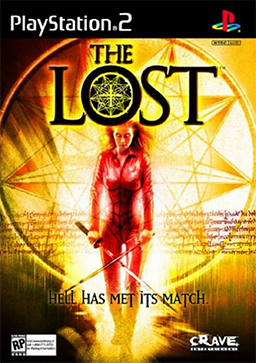 A game called The Lost by Irrational never came out. I was the lead programmer on that project and dealing with that was really tough. I threw everything I had at that project. I worked sixty to seventy hours per week on average during the four years of development. I really wanted to be able to pull it off, but for a lot of different reasons it didn't happen.
Looking back one of those reasons was I was a little too inexperienced. I was a lead programmer and it was my first time in the industry. There were a lot of things I just didn't know about yet. We didn't have a dedicated machine that was constantly running builds. We would do it by hand and burn DVDs and give them to people. When it was canceled it probably took a year before I was over that feeling of failure.
Then there's always just the normal end of the project crunches. Even if companies tell you it's not going to happen, it's going to happen. You always get through it and I tend to learn a lot during that time. Every time you ever take a shortcut where you make a hack to reach some milestone it always becomes the bug you're still fixing in the final two days. I've learned to never do that again and when to push back and make the argument the extra time needed to fix it right is worth the wait.
What did you do to cope with the canceling of your first project in the industry?
I moved onto another game and became the project manager on SWAT 4. At the time Ken Levine knew I was pretty burned out and moved me into a more managerial role. It didn't fit me. I'm just not made to manage a bunch of people; it's not a strength of mine. We eventually parted ways and I went to work for Iron Lore.
What work are you most proud of? Why?
I'm most proud of my ragdoll system in Titan Quest. It was ridiculous! It was as realistic as a game can be that's about satyrs and other mythological creatures in ancient Greece. Everything was very realistic until you shot a guy with an arrow and he flew into the air and rolled off a roof. There are tons of videos of people showing off all their crazy ragdoll deaths. I had a lot of fun with that. Every game has ragdoll physics now but it was really fun to push the envelope in that game.
I'm also very proud of how the “Pro Guitar mode” in Rock Band 3 turned out. You could plug a real guitar into your console and it would actually teach you how to play. We got a lot of good feedback on the feature. Being a guitar player really helped me out a lot for its development.
On a high level how did that system work? Was the game constantly checking to see if the notes being played on the guitar fell within a certain tolerance of acceptability in relation to the song it was teaching you?
It took a long time to work out. In a way your description is totally right. I learned just from watching the data coming out of the guitar from when I played that guitar players make a LOT of noise. I consider myself a semi-clean guitar player; I've played for a long time. If you want a machine to judge how you're playing and compare it to how the notes should be played exactly I don't know if a guitar player on the planet (except maybe the guitarist from Chic) would be able to pull it off. The algorithm took a long time with a lot of trial and error. In the end we got it feeling pretty good.
How do you see your profession evolving over the next few years?
I think if you're at a larger studio things are going to keep getting more and more focused. The quality of games is getting very high and people expect so much production value from them now. When I started you could be the graphics programmer or the gameplay programmer. Now you tend to be something far more defined than that. You may be the physics programmer, level editor tools programmer, or net code programmer. In some ways it's cool because you can figure out what you want to do and really try to master it.
Down the other track for smaller or indie studios I think programming feels like it did in the early to mid '90s where you have a ton of options in front of you and you can just go crazy. The indie community is coming out with a bunch of amazing games right now. Just seeing all these unique ideas people are coming up with is very inspiring. I can't really say programming is going to become one thing or the other, but I do see those two paths going off in separate directions.
By that you mean depending on where you work you may become the jack-of-all-trades or a hyper-focused programmer?
Yes. When you look at game jobs posted these days, they're looking for specialists. You don't see single posts asking for experience with animation, UI, art, and graphics. You'll see something as specific as "client network programmer." That's cool, but I think it's a little unfortunate. I've been lucky enough to have worked in every area of game programming. I don't think the future of game programming will be that way unless you're working on your own project or in a small studio environment.
Are there any techniques or best practices you have learned or developed that have served you well?
Lately I've gotten a lot more into test driven development. You write a ton of unit tests which can evaluate different small parts of your code. Basically you run that every time you compile and it tests to make sure whatever you just added didn't break anything.
I'm not as strict as a lot of programmers are about it. Some would argue that unless you have full code coverage of these unit tests then it's useless. I don't think anything is that black and white.
There have been a lot of times where I've added something that seemed pretty harmless and then the test went off and something seemingly unrelated blew up. I would have never known about it until weeks later. That's been great.
As for general best practices, if you know you're making a hack, it will eventually break. Re-factor all the time. As a programmer, don't write code you don't have to write. I definitely got to a point where I was over-engineering everything. Every object I wrote I tried to take everything that could ever happen into account when I probably only needed about 20% of that. Everything else was just adding the potential for more bugs and unnecessary complexity. Now I write only the code I need to and then add to it when I have to. If I find I'm not using something I've previously written I'll rip it out. That has made things far better.
John Carmack always releases his code a few years after the game has shipped. I remember the first time I saw the Quake II code. I was taken aback and found myself thinking, "This is all it is? John Carmack sucks! He isn't even thinking of the future!" It wasn't until a few years later that I realized everything he did was totally right.
How do the unit tests work exactly? Is it a set of automated processes that you have run automatically with each new build?
After I build in the compiler it just goes off. A lot of time when I program a new feature I also write some code that will test everything I assume about it. It will test all those assumptions and if one of them fails it lets me know.
As a simple example say I made a function that is supposed to rotate an object ninety degrees to the right. If it ended up actually rotating the object ninety degrees left the test will let me know and I can fix it. It ends up catching a ton of things.
At first you have to get over the pain of writing all this extra code. For each new feature you add you're also adding additional code to test it. So you're probably adding thirty to forty percent more code. For me it's been completely worth it.
What can you tell me about the first game being produced at Eerie Canal?
We haven't talked about it much yet. The game is called Dreadline. The premise is kind of bonkers. You are a team of monsters who have a time machine and you want to do the morally right thing. So even though you're monsters and it's your nature to kill people you only want to kill the ones who are going to die anyway. So you might travel to catastrophic events in human history like the Titanic or Pompeii. You kill the humans, but they weren't going to make it anyway.
One such example is Bryn Bennett, a talented programmer who has touched every part of the programming pipeline at companies like Irrational, Iron Lore, and Harmonix. He toured with his band,Bang Camaro, playing guitar while contributing to the Rock Band series. Bryn is currently working on his first game under the banner of his new indie company, Eerie Canal. There he gets to do what he loves most which is produce code for all aspects of their game, Dreadline.Why are programmers integral for the success of a game?
The bottom line is games need to run and programmers are responsible for that. As the only programmer on our game it's interesting to wear ALL the hats. If I want to run around a game that looks pretty believable, I have to give the artists the tools to pull that off. If I want a cool looking physics simulation, I have to be able to pull that off. If I want it to run faster than four frames per second, I, along with the artists because a lot of it comes down to content, have to work together to pull that off.
If you're speaking more on the game side of things, designers could have all the best ideas in the world but unless they're also a programmer it really doesn't matter. It comes down to the programmers to actually make it work. That's a bit of an issue I have with the current state of the industry and that's with roles being so heavily defined. Are you an artist, designer, programmer? I think that leads to a lot of inefficiency.
If you don't sit in the same room as the different disciplines where you can bounce ideas off each other all day, then you end up with this weird problem where designers write documents all the time then heave it over this artificial wall to the programmers. They may have no idea what they want is nearly impossible to pull off or could be done in a slightly different way much quicker.
For example, in Rock Band I was working on the “Pro Guitar mode” where you could plug a real guitar into the console. We had the designers sitting in the same room with us and we were talking about things we could add to make the game more fun.
I was playing the Lynyrd Skynyrd song Free Bird, and in that song everything is just sliding on the neck of the guitar. I said, "It would be awesome if we put slides into the game." The designer turned to me and said, "Man, I've wanted to do that forever but I thought it would be too hard!" I said, "No, I could do that today!"
That's a small, but I think very telling, example of things that can get lost when you don't have everyone sitting in a room throwing ideas around and having fun. In some studios it's very structured where a designer will come up with a document, then their supervisor will sign off on it, then it will go to the programming team and broken into parts before it's implemented. I think games could be made much more quickly and fun if some of those strict roles could be broken down a bit.
It seems some companies are going in the direction of having different disciplines more freely interacting with one another, which is encouraging. It can be tough when teams start getting large, then you do need the layers of production to help keep everything organized.
I've had this theory for some time now: a few people who are really excited and talented at what they do can get just as much done as a team that's way larger that has to deal with all the inefficiencies that come with a larger team. It's kind of proving itself right now. We've been working on our game for a few months and when we show it off to people they're floored by what the two of us have been able to accomplish. It makes me feel pretty good.
What is the greatest challenge you have had to overcome, either with a personal or professional project?
Looking back one of those reasons was I was a little too inexperienced. I was a lead programmer and it was my first time in the industry. There were a lot of things I just didn't know about yet. We didn't have a dedicated machine that was constantly running builds. We would do it by hand and burn DVDs and give them to people. When it was canceled it probably took a year before I was over that feeling of failure.
Then there's always just the normal end of the project crunches. Even if companies tell you it's not going to happen, it's going to happen. You always get through it and I tend to learn a lot during that time. Every time you ever take a shortcut where you make a hack to reach some milestone it always becomes the bug you're still fixing in the final two days. I've learned to never do that again and when to push back and make the argument the extra time needed to fix it right is worth the wait.
What did you do to cope with the canceling of your first project in the industry?
I moved onto another game and became the project manager on SWAT 4. At the time Ken Levine knew I was pretty burned out and moved me into a more managerial role. It didn't fit me. I'm just not made to manage a bunch of people; it's not a strength of mine. We eventually parted ways and I went to work for Iron Lore.
What work are you most proud of? Why?
I'm most proud of my ragdoll system in Titan Quest. It was ridiculous! It was as realistic as a game can be that's about satyrs and other mythological creatures in ancient Greece. Everything was very realistic until you shot a guy with an arrow and he flew into the air and rolled off a roof. There are tons of videos of people showing off all their crazy ragdoll deaths. I had a lot of fun with that. Every game has ragdoll physics now but it was really fun to push the envelope in that game.
I'm also very proud of how the “Pro Guitar mode” in Rock Band 3 turned out. You could plug a real guitar into your console and it would actually teach you how to play. We got a lot of good feedback on the feature. Being a guitar player really helped me out a lot for its development.
On a high level how did that system work? Was the game constantly checking to see if the notes being played on the guitar fell within a certain tolerance of acceptability in relation to the song it was teaching you?
It took a long time to work out. In a way your description is totally right. I learned just from watching the data coming out of the guitar from when I played that guitar players make a LOT of noise. I consider myself a semi-clean guitar player; I've played for a long time. If you want a machine to judge how you're playing and compare it to how the notes should be played exactly I don't know if a guitar player on the planet (except maybe the guitarist from Chic) would be able to pull it off. The algorithm took a long time with a lot of trial and error. In the end we got it feeling pretty good.
How do you see your profession evolving over the next few years?
I think if you're at a larger studio things are going to keep getting more and more focused. The quality of games is getting very high and people expect so much production value from them now. When I started you could be the graphics programmer or the gameplay programmer. Now you tend to be something far more defined than that. You may be the physics programmer, level editor tools programmer, or net code programmer. In some ways it's cool because you can figure out what you want to do and really try to master it.
Down the other track for smaller or indie studios I think programming feels like it did in the early to mid '90s where you have a ton of options in front of you and you can just go crazy. The indie community is coming out with a bunch of amazing games right now. Just seeing all these unique ideas people are coming up with is very inspiring. I can't really say programming is going to become one thing or the other, but I do see those two paths going off in separate directions.
By that you mean depending on where you work you may become the jack-of-all-trades or a hyper-focused programmer?
Yes. When you look at game jobs posted these days, they're looking for specialists. You don't see single posts asking for experience with animation, UI, art, and graphics. You'll see something as specific as "client network programmer." That's cool, but I think it's a little unfortunate. I've been lucky enough to have worked in every area of game programming. I don't think the future of game programming will be that way unless you're working on your own project or in a small studio environment.
Are there any techniques or best practices you have learned or developed that have served you well?
Lately I've gotten a lot more into test driven development. You write a ton of unit tests which can evaluate different small parts of your code. Basically you run that every time you compile and it tests to make sure whatever you just added didn't break anything.
I'm not as strict as a lot of programmers are about it. Some would argue that unless you have full code coverage of these unit tests then it's useless. I don't think anything is that black and white.
There have been a lot of times where I've added something that seemed pretty harmless and then the test went off and something seemingly unrelated blew up. I would have never known about it until weeks later. That's been great.
As for general best practices, if you know you're making a hack, it will eventually break. Re-factor all the time. As a programmer, don't write code you don't have to write. I definitely got to a point where I was over-engineering everything. Every object I wrote I tried to take everything that could ever happen into account when I probably only needed about 20% of that. Everything else was just adding the potential for more bugs and unnecessary complexity. Now I write only the code I need to and then add to it when I have to. If I find I'm not using something I've previously written I'll rip it out. That has made things far better.
John Carmack always releases his code a few years after the game has shipped. I remember the first time I saw the Quake II code. I was taken aback and found myself thinking, "This is all it is? John Carmack sucks! He isn't even thinking of the future!" It wasn't until a few years later that I realized everything he did was totally right.
How do the unit tests work exactly? Is it a set of automated processes that you have run automatically with each new build?
After I build in the compiler it just goes off. A lot of time when I program a new feature I also write some code that will test everything I assume about it. It will test all those assumptions and if one of them fails it lets me know.
As a simple example say I made a function that is supposed to rotate an object ninety degrees to the right. If it ended up actually rotating the object ninety degrees left the test will let me know and I can fix it. It ends up catching a ton of things.
At first you have to get over the pain of writing all this extra code. For each new feature you add you're also adding additional code to test it. So you're probably adding thirty to forty percent more code. For me it's been completely worth it.
What can you tell me about the first game being produced at Eerie Canal?
Wednesday, February 1, 2012
Top 5 Practices of Successful Game Developers
This week I decided to take a break from the regular posts. After ten interviews with different developers across a wide range of disciplines and companies I've observed certain prevalent themes and commonalities. I've compiled them here so all may benefit from a condensed list of practices which have contributed to the success of my interviewees.
These are thoughts and insights gleaned from the pool of developers who have appeared here on the Pixl Glass thus far and who, I dare say, have found success in what they do. While these practices are extremely helpful, bear in mind that in the end there is no magic bullet, no foolproof list you can follow to be a game developer, let alone a successful one. Taking their advice and emulating some of their best practices would certainly be a great way to start!
1) Be Inspired
"What inspires you?" has been a staple question I've asked developers in every interview. I've been impressed with the diversity of the answers given. Some were inspired, unsurprisingly, by the very industry in which they work. Playing a new AAA game or the smallest indie darling offered insights into the latest uses of technology or freshest ideas in gameplay mechanics. Other inspirations included travel, film, traditional art, printed media, world building, fellow artists’ work, or simply getting to observe someone enjoy the product they helped produce.
The important thing is not the specific source of the inspiration but the act of BEING inspired. Being inspired gives you creative energy and enthusiasm that pushes you to reach further than you thought possible. Someone motivated by passion and inspiration will produce better quality and more impactful work than someone moved purely by monetary or prestigious motives.
2) Never Stop Learning
A result of being inspired by something often leads to a desire to learn how to make what inspired you! When I asked for a technique or best practice that had served the developer well, their answer almost always included the advice to never stop learning.
This is a fast moving industry. Technology is constantly changing and evolving. New techniques and development methodologies are always being invented. In some ways a developer is much like a shark: if they don't keep swimming forward they can suffocate.
However, being fearful of falling behind the curve is not a constructive motivator to learn. You need to have a natural desire to improve yourself and create that next big thing, to push the envelope. It may be a new way of producing art, creating a sound that fits just right, or programming an engine feature that makes the game more fun. Whatever your profession, you must constantly strive to master it.
3) Take the Road Less Traveled
When I asked the developers to tell me about themselves I've received a wide range of timelines as responses. Some went as far back as their childhood through to present day detailing how they came to be where they are now. Others described just their work history. It's these histories that intrigued me most.
Nearly everyone interviewed did not start their professional careers in the game industry. They worked in "more realistic" or "safer" jobs, sometimes presuming working in games was not an achievable or desirable goal. One thing is very clear though; these individuals would not have had the skills or experience necessary to finally break into the industry without them.
This is definitely a testament to the fact that there is no "right" path to take to get into game development. The industry recognizes and recruits talented people regardless of how that talent was acquired. In many respects these individuals had the opportunity to experience things they otherwise might not have if they had been purely focused on games. They became well rounded and professionally mature because of it.
Suffice it to say, if your goal is to work in the game industry don't be fearful that working at a non-game production job will be a detriment to your career. It may just be the thing you need to make the leap.
4) Be Confident, Be Humble
Many of the folks I've interviewed have less than ten years of experience in the industry, and some fewer than five. Many felt like the role they were hired to fill, or the project they were given, was beyond their merits or capabilities. It was only after they finished the assignment that they discovered they were completely capable and extremely effective in solving the problems thrown their way.
It's natural to feel small and under prepared when tasked with something you feel is beyond you. Bear in mind you would have never been given such an opportunity if the supervisor or hiring committee wasn't certain of your abilities. Take comfort in that and let it give you some deserved confidence (confidence level up!).
However, don't let that confidence over-inflate your ego. As a couple of interviewees discovered, they were not the development gurus they had built themselves up to be in their minds. Avoid these pitfalls and accept your responsibilities with humility.
5) Listen to your Peers
This final practice ties everything together and was another common theme I found looking back through the interviews. The previous points are certainly easier to accomplished when you have the support of your peers.
Working in a vacuum can be detrimental and each interviewee has been able to make their work better with input from their peers. Peers provide reviews, critiques, criticisms, or just act as a sounding board as you work out a problem. They may be co-workers, friends, professional forum denizens, or even other contemporaries in the industry. They will inspire you, teach you new things, build you up, and help keep you grounded. In many respects they are the greatest asset any professional can have.
Wednesday, January 25, 2012
Spicy Art
From the smallest handheld to the largest AAA blockbuster, achieving a cohesive look and style in a game is a challenge. It takes a persistent vision and vigilance to ensure the development team stays on the same path.
This duty falls to the Art Director of a production. Ken Wong recently filled that role at Spicy Horse for Alice: Madness Returns. Ken is currently working as a freelance illustrator while working on his own self-produced iOS game.
Why is the Art Director important for the success of the game?
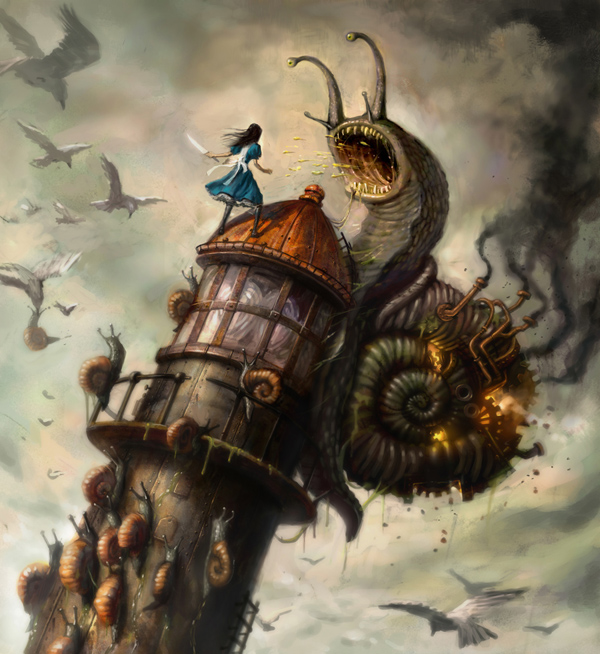 I guess this is more interesting if you're talking about when I was an Art Director at Spicy Horse (I left last year). The role of an Art Director is to lead the art department and sell the gameplay and fun through the visuals of the game. The art of a game works on several levels: to provide atmosphere, to tell a story, to convey emotion, to give feedback to the player, and to provide information about what is dangerous or breakable or valuable to the player. In a good game everything from the choice of typeface to the color of the sunlight through a window to the highlight on a gemstone is tuned or handmade for one or more of these purposes. The Art Director coordinates the art team and navigates them toward achieving these goals.
What is the greatest challenge you have had to overcome, either with a personal or professional project?
Managing the relatively young and inexperienced Alice: Madness Returns art team (myself included) was probably the biggest challenge. The project came with very high expectations which I really wanted to meet. Sometimes it was hard getting the team to all design together in the same universe.
One of the advantages of the Wonderland world is that anything is possible, but to achieve cohesiveness you need to stick with one particular brand of 'anything.' We'd have fierce arguments about whether certain ideas or looks were right for 'our Alice.'
How did you ultimately decide what your brand of Alice would look like? Was the overall look defined as a collective effort or did you and American have the definitive say on everything?
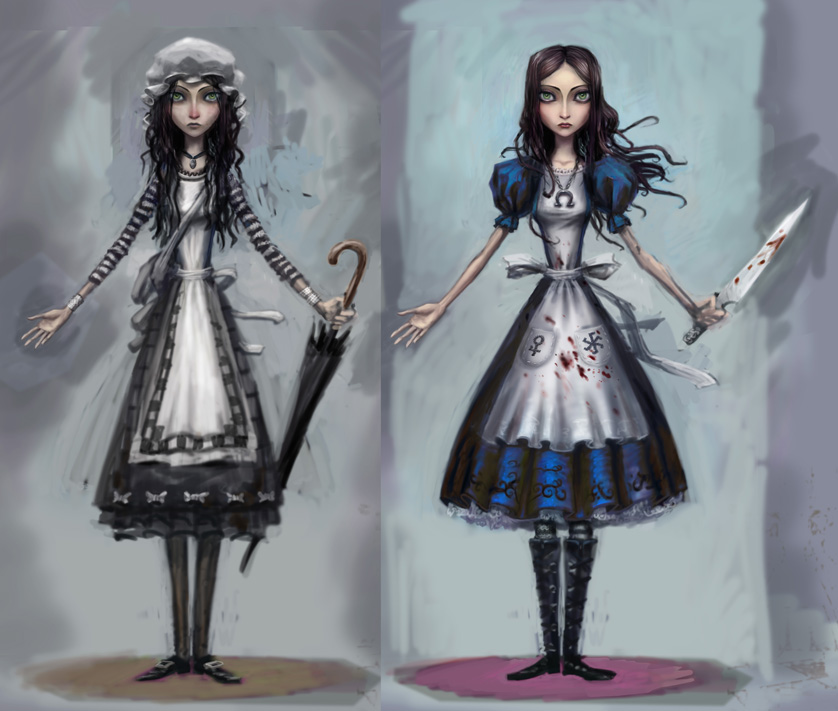 There are two aspects to the 'look' - the rendering and the design. For the rendering we strove to emulate hand-crafted art as much as possible to try and get a 'tactile' sense. I think we succeeded in this in some places and not in others, usually where we didn't have enough time or experience to tweak it just right.
The design of the objects, characters, and environments was a mix. The art team was given a lot of freedom and in some cases the art drove the design and story, rather than the other way around. I tended to give the concept artists starting points, either from the design or from the themes for a particular area, and then challenged them to riff and explore.
What work are you most proud of? Why?
I'm very proud of the art book we released for the game [Alice] through Dark Horse Books. Much of the art in the book wasn't eventually used in the actual game but it documents three years of blood, sweat, and tears, hundreds of great ideas, and some really fantastic images by some superbly talented artists.
How do you see your profession evolving over the next few years?
 I think my most interesting answer might be if you meant 'game developer.' In the 1990s and early 2000s, games had nowhere to go but bigger and prettier. The way games were controlled stayed the same, games cost the same, and most games were played sitting in front of a display or with a portable game machine. Today, you can control a game with a plastic guitar, with motion, with touch, with a keyboard and mouse, or with a classic controller. You can play games for free, or freemium, by subscription or for $0.99. You can now play on Facebook, your smartphone, XBLA, or online.
I actually think the big evolution has already happened after years of stagnation. I think in the next few years the newer models will continue to expand and the 'traditional' market will shrink but not disappear. Smaller agile teams who are able to take bigger risks will come back and perhaps even become the dominant game studio format. This is good because it's encouraging and supporting people to start their own band and find their own sound instead of using American Idol to keep the same, manufactured, status quo.
Very interesting! For the role of Art Director specifically, how do you see it evolving, either with their responsibilities, or the sort of tools they might be using to better do their jobs?
I don't think I really see much evolution for Art Directors except that the small 2 to 10 person teams don't necessarily need one. One trend in the past couple of years is that games for everybody are increasing in popularity and profit compared to games aimed at the 16 to 35-year-old male audience. This somewhat enlarges the palette of art styles we can play with. Of course, there have always been amazing, innovative art styles, but I think in the future more studios will be more open to it.
Are there any techniques/methodologies/best practices you have learned or developed that have served you well?
I think every decision we made art-wise at Spicy Horse had its drawbacks as well as advantages. I think the smart thing is to pick the strategy that best suits your team and current project.
Could you provide any specific examples to help illustrate that point?
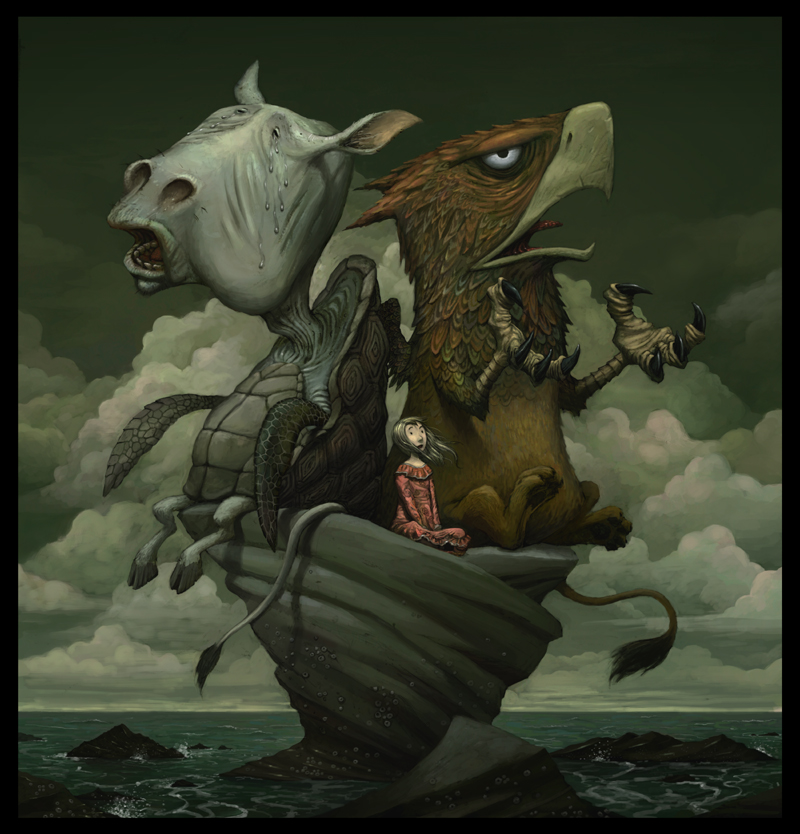 At Spicy Horse we work very organically, which is to say sometimes we need to arrive at solutions through exploration, experimentation, and trial and error. For the Level Designers, they like to have a bunch of building block art assets to play with in the editor. The first assets we made were very early in the game development before the story or gameplay had been established. The art team and level design team could try out lots of wacky stuff while waiting for the design to mature. It also allowed us to start the art outsourcing process, like figuring out information needed to be in the spec and which outsource partners matched our project best.
Almost all our 3D assets were outsourced to other companies. To avoid misunderstandings we wanted the specs to be as detailed as possible. Therefore, our team was very concept artist heavy - up to 8 artists at peak time. My background is in concept art so our studio tended to place a lot of emphasis on 2D visualization.
What is the title on which you are currently working?
I'm working on my own iOS game. I don't want to spill the beans too early, but it involves cruelty to cute animals.
Is there anything about your current or most recent title you are particularly excited about in which you are (were) directly involved?
I'm excited about trying to make a game almost entirely by myself (I'm doing the art, animation and coding; I'll outsource the sound and music). It's a long hard road and I might not end up recouping my costs but I'll be able to say “I did that.”
This duty falls to the Art Director of a production. Ken Wong recently filled that role at Spicy Horse for Alice: Madness Returns. Ken is currently working as a freelance illustrator while working on his own self-produced iOS game.
Why is the Art Director important for the success of the game?
What is the greatest challenge you have had to overcome, either with a personal or professional project?
Managing the relatively young and inexperienced Alice: Madness Returns art team (myself included) was probably the biggest challenge. The project came with very high expectations which I really wanted to meet. Sometimes it was hard getting the team to all design together in the same universe.
One of the advantages of the Wonderland world is that anything is possible, but to achieve cohesiveness you need to stick with one particular brand of 'anything.' We'd have fierce arguments about whether certain ideas or looks were right for 'our Alice.'
How did you ultimately decide what your brand of Alice would look like? Was the overall look defined as a collective effort or did you and American have the definitive say on everything?
The design of the objects, characters, and environments was a mix. The art team was given a lot of freedom and in some cases the art drove the design and story, rather than the other way around. I tended to give the concept artists starting points, either from the design or from the themes for a particular area, and then challenged them to riff and explore.
What work are you most proud of? Why?
I'm very proud of the art book we released for the game [Alice] through Dark Horse Books. Much of the art in the book wasn't eventually used in the actual game but it documents three years of blood, sweat, and tears, hundreds of great ideas, and some really fantastic images by some superbly talented artists.
How do you see your profession evolving over the next few years?
I actually think the big evolution has already happened after years of stagnation. I think in the next few years the newer models will continue to expand and the 'traditional' market will shrink but not disappear. Smaller agile teams who are able to take bigger risks will come back and perhaps even become the dominant game studio format. This is good because it's encouraging and supporting people to start their own band and find their own sound instead of using American Idol to keep the same, manufactured, status quo.
Very interesting! For the role of Art Director specifically, how do you see it evolving, either with their responsibilities, or the sort of tools they might be using to better do their jobs?
I don't think I really see much evolution for Art Directors except that the small 2 to 10 person teams don't necessarily need one. One trend in the past couple of years is that games for everybody are increasing in popularity and profit compared to games aimed at the 16 to 35-year-old male audience. This somewhat enlarges the palette of art styles we can play with. Of course, there have always been amazing, innovative art styles, but I think in the future more studios will be more open to it.
Are there any techniques/methodologies/best practices you have learned or developed that have served you well?
I think every decision we made art-wise at Spicy Horse had its drawbacks as well as advantages. I think the smart thing is to pick the strategy that best suits your team and current project.
Could you provide any specific examples to help illustrate that point?
Almost all our 3D assets were outsourced to other companies. To avoid misunderstandings we wanted the specs to be as detailed as possible. Therefore, our team was very concept artist heavy - up to 8 artists at peak time. My background is in concept art so our studio tended to place a lot of emphasis on 2D visualization.
What is the title on which you are currently working?
I'm working on my own iOS game. I don't want to spill the beans too early, but it involves cruelty to cute animals.
Is there anything about your current or most recent title you are particularly excited about in which you are (were) directly involved?
I'm excited about trying to make a game almost entirely by myself (I'm doing the art, animation and coding; I'll outsource the sound and music). It's a long hard road and I might not end up recouping my costs but I'll be able to say “I did that.”
Wednesday, January 18, 2012
Creative Capture
To those untrained in its usage or mechanics, technology can seem akin to magic. People expect it to "just work." No technology bears this label more than motion capture.
Thanks to high profile films like Avatar, the use of the technology is better known to the public at large. However most people's understanding is simplistic as: Actor performs in a silly outfit, data goes into the computer, character appears on screen performing those actions. Most people don't realize motion capture is merely a single step in a long series to bring digital characters to life.
Billy Rivers is an Animator for Epic Games. Though his official title is Animator, he feels a more accurate description of his duties would be Motion Capture Animator. He is responsible for running the set on capture days, processing and cleaning all the data produced, and finally handing that data off to the animation team.
Why is a motion capture (“mocap”) animator important for the success of a game like Gears 3?
 As a mocap animator, specifically, I'm feeding the rest of the pipeline for everything but creature work. If it was a biped and it moved in Gears of War it was probably at one point touched by mocap. Whether or not it was prototyped on the mocap stage to make it really quick or it was a nearly finalized animation with secondary motion, the process wouldn't be as fast as it is without mocap.
There's just no way a room full of animators could produce 90 minutes worth of cinematics plus all the custom gameplay animations per character in the time we needed them. We produce so much that it's impossible to do without mocap to speed the process along.
Tell me about your role at Epic.
My title is Animator. I would say I'm more of a motion capture animator which seems kind of silly, splitting hairs really. I focus much more on the motion capture pipeline and processing side of things. I'm on the floor running the shoots making sure everything is working properly. I then take and clean the data making sure the weights look right, the hips are positioned correctly, things like that.
I take the output of that process and distribute it to the animation team who then adds further detail like secondary and facial animation. I also take the data and create gameplay animation from it. I'll take it from the first stage of working with the actors and markers and raw data all the way up to importing it into the game. Putting weapons in characters’ hands and adding secondary motion. I touch everything that happens with biped characters.
I would definitely call myself a motion capture animator but with a strong emphasis on "animator" because I do so much creature work as well. I animated a lot of the leviathan in Gears 3 and some of the polyp attacks.
I imagine to most people when they hear “motion capture” they believe it to be a simple “plug and play” process: the actor does their thing and it goes straight into the game or movie. There's just so much extra work that takes place between capture and what you see on screen.
 Exactly, and we don't capture anything as granular as the face or hands. We have a lot of skilled animators on the team. A number of them, for all of Gears 3, focused on cinematic facial and hand animations. They made sure the characters were looking at each other and really communicating their lines. Some of these animators have such amazing skill sets and backgrounds. It's awesome seeing the stuff they come up with.
The characters’ emotions were not based solely off the actors’ body motions. It was really sold by the animators’ touch on that mocap afterwards. It was really cool to see how the raw mocap I gave them evolved. They were able to add so much more character and depth to the performances. I get to do that same sort of fun stuff with the creatures and characters in different scenes as well.
A lot of this work was done previously by Scott Dossett. I stepped into his shoes and was there for the majority of the cinematics work. He did a lot of leviathan work. When he left it was intimidating to have to fill his giant shoes. He's a skilled animator and knows his way around the mocap stage. It was a ton of fun learning from him and all the talented people here.
Epic really gives a lot of room to grow. The average number of years an Epic employee has been in the industry is 10 years. When I came in I had about two. I was put in charge of something extremely important, the cinematics for Gears of War 3. There was a huge weight of responsibility, but in a good way. I felt like they gave me a lot of trust really quickly and my leads said I didn't disappoint. It was great to see the amazing tools he (Dossett) had created and imagine how we can expand them for future games.
What is the greatest challenge you have had to overcome, either with a personal or professional project?
I stepped into this role under Scott Dossett. The original plan was a six-month transition to train me up on all the systems before he departed. When the time came we ended up only having two weeks. That was definitely a "drinking from the fire hose" scenario. I was digesting so much information so quickly. We were in the middle of cinematic production at the time doing two mocap shoots a week.
You either pick it up and learn or you don't and thankfully I picked it up. Luckily it only took two weeks of crazily writing down every word he said and memorizing. It was a really hard transition to pick up and go but at the end of the day he felt comfortable leaving and the team felt comfortable with me taking over. It all worked out in the end. It was very, very intimidating and a huge challenge to walk in and take over the mocap animation pipeline in two weeks.
Do the Gears 3 voice actors also perform the physical roles on the mocap stage?
All the audio is recorded ahead of time on a sound stage. For Gears 3 we got the audio processed and cut the way it was going to appear in game. Then we brought in local talent for the motion capture. They're a lot of fun to work with. We would play the audio on the mocap stage to get the timing and the actors would belt out the lines and act to it. We had a lot of random ad-lib moments that we got to put in here and there.
Do you have any specific examples you can share that made it into Gears 3?
 We were capturing for the character of Ashman in the level of Char. He was the guy who would pretend he was an ash statue and take off whenever you got too close while setting off traps. Basically pissing off the main characters the whole time. The actors who played him also played Baird and a lot of the other quirky smartass type of characters that are so fun and prevalent in Gears.
By the time you finally reach this guy he's been so wily and quick you think he'll have something else up his sleeve but he comes down an elevator and has nowhere to go. At the last second we were doing a take and he froze in place in front of the actor playing Marcus. It was obvious he would have seen him just freeze in place, he was just being funny. Everyone busted up laughing.
Every take afterward we told him to do that because it was so funny. It ultimately went into the game. It was such a great random moment that came from having fun on the stage.
That's great the process accounts for those moments of inspiration and ad-lib so new performances can be discovered and made better instead of having to stick to a rigid script.
I know other studios like Naughty Dog for the Uncharted series captures their audio and motion at the same time so they have tons of ad-lib moments. A lot of great moments develop from the characters interacting with each other. They'll rewrite the script on the fly to incorporate those new ideas. That's why they get so much character in the interactions in Uncharted. I love to see that.
We're flipping it a little bit in the new DLC we just released: RAAM's Shadow. You have a little bit more character interaction. We've had good feedback on the cinematics because we decided to do the acting first and the dialog second. We still had scripts that the mocap actors were performing but a lot of the timing we got from them acting out the performance on stage.
The professional voice actors then used that for the timing in the recording studio. What that did was a lot of the scenes in the script we modified on the fly because certain interactions made more sense when the actors made subtle changes during the performance. It was cool to see it develop organically on the set. Hopefully we'll be seeing a lot of that in the future.
What work are you most proud of? Why?
 I want to say Gears of War 3. I'm so proud of the product. It's so fun to play and see my animation work pop up. In the starting sequence of Nightmare you see the big creature come out and start pounding the ground. I got to work on that guy and it's like, "there's my guy getting sucked into the vortex!" It was some crazy idea me and Dave Nash came up with at 11:30 at night as we were trying to get this thing into dailies for the next day. Stuff like that makes me have a real sense of pride in the finished product.
I really liked how tight the cinematics were in RAAM's Shadow. It was a collaboration of people saying, "we liked the cinematic process in Gears 3 but how can we do it even better?" I feel like we learned a lot from Gears 3, refined the process, and improved on what we'd done before. I'm proud we were able to grow so much in such a short amount of time.
I always want to do that on every project in my career. I want to learn to do something and then find a way to improve it. We'll never stop learning even when we're 30-year veterans in the industry.
How do you see animation and motion capture evolving over the next few years?
For me as an animator the dirty secret we share is that we don't like facial motion capture because in almost every case an animator can always add something that the fidelity of the technology won't let you capture. Take LA Noire for example. Their level of detail in the face was so high that it made the standard mocap on the body not jump out as much.
Until we can capture that level of fidelity across the entire body including the face, I don't see mocap as being the end all solution to things. It will definitely speed up the process but it won't be the 1:1 solution people sometimes think it is. I would hope to see it becoming higher and higher fidelity.
 I want to see it evolve into more control given to the animators. We want to be able to tweak an eyelid with 6 different controls. We want to be able to put so much detailed animation into the face so you believe you're looking at a real person. An actor can do so much but an animator will sit there and look at the same shot for hours on end. They will add every little detail that they can.
A great example is Blizzard's latest Diablo cinematic. It is amazing. The humans have so many nuanced facial quirks. They have such a talented team. It still has that CG feel but it looks so real. I want to see every cinematic in every game reach that level and surpass it.
Are there any techniques or best practices you have learned or developed that have served you well?
I've always known I'm not the smartest person in the room. There's always something to learn from your peers. It doesn't matter if you're in a small startup or the biggest established studio in the world, there's always somebody who knows something that you don't. You can always learn from those people.
Forge relationships, talk to people about what they do even if it isn't directly related to what you do. Animation affects every discipline. Everything is so interconnected. By learning what other people do and how they operate you will often find ways of improving your own work and make what you do look better. Never stop learning.
What is the title on which you are currently working?
I'm working on Fortnite which was recently announced. It's different than what we've worked on before, it's been a lot of fun. I'm also working on some other unannounced projects.
Thanks to high profile films like Avatar, the use of the technology is better known to the public at large. However most people's understanding is simplistic as: Actor performs in a silly outfit, data goes into the computer, character appears on screen performing those actions. Most people don't realize motion capture is merely a single step in a long series to bring digital characters to life.
Billy Rivers is an Animator for Epic Games. Though his official title is Animator, he feels a more accurate description of his duties would be Motion Capture Animator. He is responsible for running the set on capture days, processing and cleaning all the data produced, and finally handing that data off to the animation team.
Why is a motion capture (“mocap”) animator important for the success of a game like Gears 3?
 As a mocap animator, specifically, I'm feeding the rest of the pipeline for everything but creature work. If it was a biped and it moved in Gears of War it was probably at one point touched by mocap. Whether or not it was prototyped on the mocap stage to make it really quick or it was a nearly finalized animation with secondary motion, the process wouldn't be as fast as it is without mocap.
There's just no way a room full of animators could produce 90 minutes worth of cinematics plus all the custom gameplay animations per character in the time we needed them. We produce so much that it's impossible to do without mocap to speed the process along.
Tell me about your role at Epic.
My title is Animator. I would say I'm more of a motion capture animator which seems kind of silly, splitting hairs really. I focus much more on the motion capture pipeline and processing side of things. I'm on the floor running the shoots making sure everything is working properly. I then take and clean the data making sure the weights look right, the hips are positioned correctly, things like that.
I take the output of that process and distribute it to the animation team who then adds further detail like secondary and facial animation. I also take the data and create gameplay animation from it. I'll take it from the first stage of working with the actors and markers and raw data all the way up to importing it into the game. Putting weapons in characters’ hands and adding secondary motion. I touch everything that happens with biped characters.
I would definitely call myself a motion capture animator but with a strong emphasis on "animator" because I do so much creature work as well. I animated a lot of the leviathan in Gears 3 and some of the polyp attacks.
I imagine to most people when they hear “motion capture” they believe it to be a simple “plug and play” process: the actor does their thing and it goes straight into the game or movie. There's just so much extra work that takes place between capture and what you see on screen.
 Exactly, and we don't capture anything as granular as the face or hands. We have a lot of skilled animators on the team. A number of them, for all of Gears 3, focused on cinematic facial and hand animations. They made sure the characters were looking at each other and really communicating their lines. Some of these animators have such amazing skill sets and backgrounds. It's awesome seeing the stuff they come up with.
The characters’ emotions were not based solely off the actors’ body motions. It was really sold by the animators’ touch on that mocap afterwards. It was really cool to see how the raw mocap I gave them evolved. They were able to add so much more character and depth to the performances. I get to do that same sort of fun stuff with the creatures and characters in different scenes as well.
A lot of this work was done previously by Scott Dossett. I stepped into his shoes and was there for the majority of the cinematics work. He did a lot of leviathan work. When he left it was intimidating to have to fill his giant shoes. He's a skilled animator and knows his way around the mocap stage. It was a ton of fun learning from him and all the talented people here.
Epic really gives a lot of room to grow. The average number of years an Epic employee has been in the industry is 10 years. When I came in I had about two. I was put in charge of something extremely important, the cinematics for Gears of War 3. There was a huge weight of responsibility, but in a good way. I felt like they gave me a lot of trust really quickly and my leads said I didn't disappoint. It was great to see the amazing tools he (Dossett) had created and imagine how we can expand them for future games.
What is the greatest challenge you have had to overcome, either with a personal or professional project?
I stepped into this role under Scott Dossett. The original plan was a six-month transition to train me up on all the systems before he departed. When the time came we ended up only having two weeks. That was definitely a "drinking from the fire hose" scenario. I was digesting so much information so quickly. We were in the middle of cinematic production at the time doing two mocap shoots a week.
You either pick it up and learn or you don't and thankfully I picked it up. Luckily it only took two weeks of crazily writing down every word he said and memorizing. It was a really hard transition to pick up and go but at the end of the day he felt comfortable leaving and the team felt comfortable with me taking over. It all worked out in the end. It was very, very intimidating and a huge challenge to walk in and take over the mocap animation pipeline in two weeks.
Do the Gears 3 voice actors also perform the physical roles on the mocap stage?
All the audio is recorded ahead of time on a sound stage. For Gears 3 we got the audio processed and cut the way it was going to appear in game. Then we brought in local talent for the motion capture. They're a lot of fun to work with. We would play the audio on the mocap stage to get the timing and the actors would belt out the lines and act to it. We had a lot of random ad-lib moments that we got to put in here and there.
Do you have any specific examples you can share that made it into Gears 3?

By the time you finally reach this guy he's been so wily and quick you think he'll have something else up his sleeve but he comes down an elevator and has nowhere to go. At the last second we were doing a take and he froze in place in front of the actor playing Marcus. It was obvious he would have seen him just freeze in place, he was just being funny. Everyone busted up laughing.
Every take afterward we told him to do that because it was so funny. It ultimately went into the game. It was such a great random moment that came from having fun on the stage.
That's great the process accounts for those moments of inspiration and ad-lib so new performances can be discovered and made better instead of having to stick to a rigid script.
I know other studios like Naughty Dog for the Uncharted series captures their audio and motion at the same time so they have tons of ad-lib moments. A lot of great moments develop from the characters interacting with each other. They'll rewrite the script on the fly to incorporate those new ideas. That's why they get so much character in the interactions in Uncharted. I love to see that.
The professional voice actors then used that for the timing in the recording studio. What that did was a lot of the scenes in the script we modified on the fly because certain interactions made more sense when the actors made subtle changes during the performance. It was cool to see it develop organically on the set. Hopefully we'll be seeing a lot of that in the future.
What work are you most proud of? Why?

I really liked how tight the cinematics were in RAAM's Shadow. It was a collaboration of people saying, "we liked the cinematic process in Gears 3 but how can we do it even better?" I feel like we learned a lot from Gears 3, refined the process, and improved on what we'd done before. I'm proud we were able to grow so much in such a short amount of time.
I always want to do that on every project in my career. I want to learn to do something and then find a way to improve it. We'll never stop learning even when we're 30-year veterans in the industry.
How do you see animation and motion capture evolving over the next few years?
For me as an animator the dirty secret we share is that we don't like facial motion capture because in almost every case an animator can always add something that the fidelity of the technology won't let you capture. Take LA Noire for example. Their level of detail in the face was so high that it made the standard mocap on the body not jump out as much.
Until we can capture that level of fidelity across the entire body including the face, I don't see mocap as being the end all solution to things. It will definitely speed up the process but it won't be the 1:1 solution people sometimes think it is. I would hope to see it becoming higher and higher fidelity.
 I want to see it evolve into more control given to the animators. We want to be able to tweak an eyelid with 6 different controls. We want to be able to put so much detailed animation into the face so you believe you're looking at a real person. An actor can do so much but an animator will sit there and look at the same shot for hours on end. They will add every little detail that they can.
A great example is Blizzard's latest Diablo cinematic. It is amazing. The humans have so many nuanced facial quirks. They have such a talented team. It still has that CG feel but it looks so real. I want to see every cinematic in every game reach that level and surpass it.
Are there any techniques or best practices you have learned or developed that have served you well?
I've always known I'm not the smartest person in the room. There's always something to learn from your peers. It doesn't matter if you're in a small startup or the biggest established studio in the world, there's always somebody who knows something that you don't. You can always learn from those people.
Forge relationships, talk to people about what they do even if it isn't directly related to what you do. Animation affects every discipline. Everything is so interconnected. By learning what other people do and how they operate you will often find ways of improving your own work and make what you do look better. Never stop learning.
What is the title on which you are currently working?
I'm working on Fortnite which was recently announced. It's different than what we've worked on before, it's been a lot of fun. I'm also working on some other unannounced projects.
Wednesday, January 11, 2012
Inspired Interface
It's something we use every time we start up a game, select our player, change our gear, or swap some gems. It's a ubiquitous element that is absolutely crucial to get right and can hamstring any game that gets it wrong. I'm speaking about the user interface.
A game UI has the ability to help or hinder the player experience depending on its quality. At its best players don't even think about how they are using it. Everything is natural and unobtrusive. At its worst menus are hard to navigate, unintuitive, and critical information is hard to find.
Connie Yang is a Senior UI Designer and the UI Lead for Bejeweled Blitz at PopCap Games. Her career began as a graphic designer in Shanghai before making the transition to game development. When given the opportunity to travel, she finds great sources of inspiration from different cultures around the world.
Why is it important to have well done UI design to make a good game experience?
 UI design is important for every single game, particularly with casual games. The player is not a character immersed in a 3D world. You aren't lost in this other space. For a game like Bejeweled the whole gameplay mechanic of swapping gems is a UI. In this title in particular it's very important to make sure that experience and what the user sees, hears, and feels make the game fun and rewarding.
It could be colored tiles people are swapping but instead it's animated gems or a special rare gem with flames and rainbows. We try to be wacky with that stuff. We're really creating the entire gameplay effect since we don't have to convey information about a world or characters.
I never stopped to think how UI must be even more important for PopCap style games since for something like Bejeweled the whole game is a large series of manipulatable UI elements. Does your team help design some of the gameplay features like how gems get swapped or do you mostly focus on elements like menus?
Something like that falls under core game mechanics. We have a team of very talented game designers who work on stuff like that. One of the best things about PopCap is we have a very open environment. Everyone can have input. If some people think one mechanic isn't very fun but another group does it spawns a constructive discussion. It's not like one person gets to say, "This is the way it's going to be, and that's it!"
I'd say our primary focus is more interacting with the other elements of the gameplay like getting all the information organized and screen flow.
What is the greatest challenge you have had to overcome, either with a personal or professional project?
Managing a project always presents a lot more difficulties than anyone expects. You have to always consider what needs to be done within a given time and deal with the possibility features might change drastically based on iteration and feedback. You have to be super fluid.
You also have to make sure your team and everyone you work with is the same way. Even with all those changes not everyone will always be happy. There's rarely 100% happiness with every decision. You have to make sure everyone is still motivated to get everything done because it's not slowing down. It's just going in a different direction. We try very much to keep to the agile development process.
Did you originally start in a managerial role at PopCap or was that something you moved into?
I originally started as a designer at a graphic design firm in Shanghai. Then I became an art director and managed a small team of designers. When I moved to PopCap Shanghai I entered as a senior designer and then started managing others. Here at PopCap Seattle I came in as a senior UI designer and now I have a small team of designers to work on this awesome product.
What work are you most proud of?
 We just officially released Bejeweled Blitz as a free iOS app. This is the first time we've split Bejeweled Blitz out from the Bejeweled 2 app which you always had to pay for. They were bundled together which is different than what we do on Facebook where Bejeweled Blitz is a free game with micro-transactions.
This is the first time we're mimicking that on the iPhone. This is possibly one of the longest and most examined mobile products we've ever worked on so everyone is waiting with bated breath to see what happens. This is our first time trying a freemium product on the mobile market. We're all super excited about it!
What sort of challenges did you have in making this a new standalone product on the iOS?
We built a completely new app from the ground up. Bejeweled Blitz is one of the oldest popular games on Facebook. We keep adding new features and updating it but we've never rebuilt it from scratch. It's become cobbled together over time. We really wanted to do something totally clean and optimized for the iOS app to allow us to easily update the product and gather user metrics.
How do you see UI design evolving over the next few years?
UI design is at a funny place right now. A lot of people don't know what it is. Until I got here there was maybe one other UI designer. Even at this worldwide company of 500 or so the UI design group is very, very small. We've always had a lot of game artists and graphic designers but not many people in this category. People don't really know what to make of it yet. Is it valuable or not? Is it different than the work of graphic designers or artists? It's a strange balance we have to strike with everyone.
It's going to be more recognizable and understood by people as time goes on particularly in the casual games industry as casual games get more and more popular. The games you see on Facebook and mobile devices can't get that vast cinematic landscape you can achieve on a console. So much of it relies on the interface design because that's all the player sees.
Are there any techniques or best practices you have learned that have served you well over the years?
My process is pretty straightforward. I make sure I understand everything that needs to be in a certain game or application. Then I start with wireframing. I basically create a detailed flowchart of how I imagine the information to be distributed and how things are laid out and what the user flow may be. That goes through several rounds of iteration and feedback with everyone on the team. They make sure it's possible, makes sense, and it matches the game style we want to deliver.
Once we have that hammered out we go into a visual design process. How is it going to look and behave? How will it transition? We'll flesh out a lot of details on that front. From there we iterate and get feedback.
The next stage is to start producing the assets and working directly with the developers to get everything working right. From there it's polish like making sure animation timings are just right.
Even though you can go through this process, it can all change in an instant.
What sort of tools do you use to make these rapid prototypes?
We initially create flat diagrams; boxes and arrows and text to convey our ideas. We make interactive prototypes using Adobe Flash to do quick mockups of our UI designs. There are tons of other good user interface wireframing tools out there too. If you want to use a different one it's totally fine.
Other than PopCap's library, are there any games out right now that you think has a successful and well made UI?
I unfortunately only feel like I can better pick out a few that did a poor job. I'm a big fan of League of Legends. It's been my go-to game, it's super fun. The user interface is not great. It's hard to do a lot of the basic functionalities like inviting friends into a game and getting a room set up. Things can be hard to find. They've made a lot of improvements lately, particularly in the store. It used to be one big screen and you couldn't easily navigate to other items or categories.
I like the new Xbox dashboard. It really took a page out of the Windows 7 phone, "Metro", interface. Everything is in boxes and very clean looking. It's a little strange to get used to but it's definitely more pleasing than the previous iteration. It also conveys a bit more relevant information to you as a player.
Since you've just released Bejeweled Blitz are you now working on a new title?
Bejeweled Blitz is a constantly updating product. We already have several updates planned for the iPhone app, things like features that we weren't able to implement for the first release. The Facebook version is constantly evolving with new features as well. I'm the UI Lead for the Bejeweled Blitz team so I focus on all its platforms.
Is there anything about the new Bejeweled Blitz iOS app which you are particularly proud of or excited about?
The entire menu system, all the art and UI is completely new. That's something my team and I created from scratch. It's quite a sense of accomplishment.
A game UI has the ability to help or hinder the player experience depending on its quality. At its best players don't even think about how they are using it. Everything is natural and unobtrusive. At its worst menus are hard to navigate, unintuitive, and critical information is hard to find.
Connie Yang is a Senior UI Designer and the UI Lead for Bejeweled Blitz at PopCap Games. Her career began as a graphic designer in Shanghai before making the transition to game development. When given the opportunity to travel, she finds great sources of inspiration from different cultures around the world.
Why is it important to have well done UI design to make a good game experience?
UI design is important for every single game, particularly with casual games. The player is not a character immersed in a 3D world. You aren't lost in this other space. For a game like Bejeweled the whole gameplay mechanic of swapping gems is a UI. In this title in particular it's very important to make sure that experience and what the user sees, hears, and feels make the game fun and rewarding.It could be colored tiles people are swapping but instead it's animated gems or a special rare gem with flames and rainbows. We try to be wacky with that stuff. We're really creating the entire gameplay effect since we don't have to convey information about a world or characters.
I never stopped to think how UI must be even more important for PopCap style games since for something like Bejeweled the whole game is a large series of manipulatable UI elements. Does your team help design some of the gameplay features like how gems get swapped or do you mostly focus on elements like menus?
Something like that falls under core game mechanics. We have a team of very talented game designers who work on stuff like that. One of the best things about PopCap is we have a very open environment. Everyone can have input. If some people think one mechanic isn't very fun but another group does it spawns a constructive discussion. It's not like one person gets to say, "This is the way it's going to be, and that's it!"
I'd say our primary focus is more interacting with the other elements of the gameplay like getting all the information organized and screen flow.
What is the greatest challenge you have had to overcome, either with a personal or professional project?
Managing a project always presents a lot more difficulties than anyone expects. You have to always consider what needs to be done within a given time and deal with the possibility features might change drastically based on iteration and feedback. You have to be super fluid.
You also have to make sure your team and everyone you work with is the same way. Even with all those changes not everyone will always be happy. There's rarely 100% happiness with every decision. You have to make sure everyone is still motivated to get everything done because it's not slowing down. It's just going in a different direction. We try very much to keep to the agile development process.
Did you originally start in a managerial role at PopCap or was that something you moved into?
I originally started as a designer at a graphic design firm in Shanghai. Then I became an art director and managed a small team of designers. When I moved to PopCap Shanghai I entered as a senior designer and then started managing others. Here at PopCap Seattle I came in as a senior UI designer and now I have a small team of designers to work on this awesome product.
What work are you most proud of?
This is the first time we're mimicking that on the iPhone. This is possibly one of the longest and most examined mobile products we've ever worked on so everyone is waiting with bated breath to see what happens. This is our first time trying a freemium product on the mobile market. We're all super excited about it!
What sort of challenges did you have in making this a new standalone product on the iOS?
We built a completely new app from the ground up. Bejeweled Blitz is one of the oldest popular games on Facebook. We keep adding new features and updating it but we've never rebuilt it from scratch. It's become cobbled together over time. We really wanted to do something totally clean and optimized for the iOS app to allow us to easily update the product and gather user metrics.
How do you see UI design evolving over the next few years?
UI design is at a funny place right now. A lot of people don't know what it is. Until I got here there was maybe one other UI designer. Even at this worldwide company of 500 or so the UI design group is very, very small. We've always had a lot of game artists and graphic designers but not many people in this category. People don't really know what to make of it yet. Is it valuable or not? Is it different than the work of graphic designers or artists? It's a strange balance we have to strike with everyone.
It's going to be more recognizable and understood by people as time goes on particularly in the casual games industry as casual games get more and more popular. The games you see on Facebook and mobile devices can't get that vast cinematic landscape you can achieve on a console. So much of it relies on the interface design because that's all the player sees.
Are there any techniques or best practices you have learned that have served you well over the years?
My process is pretty straightforward. I make sure I understand everything that needs to be in a certain game or application. Then I start with wireframing. I basically create a detailed flowchart of how I imagine the information to be distributed and how things are laid out and what the user flow may be. That goes through several rounds of iteration and feedback with everyone on the team. They make sure it's possible, makes sense, and it matches the game style we want to deliver.
Once we have that hammered out we go into a visual design process. How is it going to look and behave? How will it transition? We'll flesh out a lot of details on that front. From there we iterate and get feedback.
The next stage is to start producing the assets and working directly with the developers to get everything working right. From there it's polish like making sure animation timings are just right.
Even though you can go through this process, it can all change in an instant.
What sort of tools do you use to make these rapid prototypes?
We initially create flat diagrams; boxes and arrows and text to convey our ideas. We make interactive prototypes using Adobe Flash to do quick mockups of our UI designs. There are tons of other good user interface wireframing tools out there too. If you want to use a different one it's totally fine.
Other than PopCap's library, are there any games out right now that you think has a successful and well made UI?
I unfortunately only feel like I can better pick out a few that did a poor job. I'm a big fan of League of Legends. It's been my go-to game, it's super fun. The user interface is not great. It's hard to do a lot of the basic functionalities like inviting friends into a game and getting a room set up. Things can be hard to find. They've made a lot of improvements lately, particularly in the store. It used to be one big screen and you couldn't easily navigate to other items or categories.
I like the new Xbox dashboard. It really took a page out of the Windows 7 phone, "Metro", interface. Everything is in boxes and very clean looking. It's a little strange to get used to but it's definitely more pleasing than the previous iteration. It also conveys a bit more relevant information to you as a player.
Since you've just released Bejeweled Blitz are you now working on a new title?
Bejeweled Blitz is a constantly updating product. We already have several updates planned for the iPhone app, things like features that we weren't able to implement for the first release. The Facebook version is constantly evolving with new features as well. I'm the UI Lead for the Bejeweled Blitz team so I focus on all its platforms.
Is there anything about the new Bejeweled Blitz iOS app which you are particularly proud of or excited about?
The entire menu system, all the art and UI is completely new. That's something my team and I created from scratch. It's quite a sense of accomplishment.
Wednesday, January 4, 2012
Fantastic Sound for Fantastic Worlds
Have you ever relived a key moment in your mind from a favorite movie or game just by hearing a bit of the soundtrack? Had a swell of emotion upon hearing a few carefully arranged notes?
Such is the power of audio and music. Well-crafted sound design can create a sense of place in an otherwise fantastical environment or make the hair stand up on the back of your neck hearing the echoing footsteps of an unseen antagonist. Sound tells the story of the world we can and cannot see.
Maclaine Diemer is a Sound Designer for ArenaNet. His love for music and audio has led him from studying music academically and touring the country with several bands to ultimately working on such titles as The Beatles: Rock Band and Guild Wars 2. He has a natural thirst to create which is quenched quite readily by his current work.
Why is the position of Sound Designer important for the success of the game?
Try playing a game on mute and I think that explains it better than I could. You're simply not as engaged.
I know for an MMO-type game like Guild Wars 2 it's more and more likely people are not going to listen as closely or turn off sounds altogether after they've played the game for several hundred hours. They might have their chat program on with their buddies or just listening to their own music, which is really heartbreaking for us here in the audio department. We don't expect people to be fully engaged with the audio ALL of the time but I would think that for the first couple dozen hours of the experience you'd want to listen.
If it's not there you're not as fully engaged, but even more so if it doesn't sound good. A game like Guild Wars 2 is so much about selling the experience of the world to you rather than a game like Battlefield where it's less about the world as a whole and more about the intensity, excitement, and adrenaline rush of being in battle. They do an amazing job of that.
I've been to a lecture by one of the audio guys from DICE and he talked about how they built their audio system to be most effective. It's amazing and it does what it needs to do so well, which is sell that feeling of being in a battle. If their system wasn't as good as it is then that game wouldn't be quite as exciting. It'd still be fun but I don't think it'd inspire the same amount of intensity and passion.
Even though our game is very different, we still strive for the same level of immersion in the core experience. We're selling this world that you want to spend a lot of time in. Having another life you can experience. If the audio doesn't sound good then it's not going to happen. If we do our jobs right you'd say, "Well of course this creature sounds like that" or a spell or race sound a certain way because that's just how they're supposed to sound. It’s completely natural and the player doesn’t even think about it.
What is the greatest challenge you have had to overcome, either with a personal or professional project?
The most challenging thing was trying to get that first shot. The technical side of making games can be overcome by anybody. I think anyone is capable of learning what it takes to make audio for games. I hesitate to use the cliché, "It's not rocket science", but it's not. That's not to say that there aren't very smart and talented people here or at other companies but I think anybody could do it if they wanted to. Getting that first chance was really difficult.
I've learned so much in the few years I've been making games. I continue to learn every single day. But that to me doesn't seem hard, that's what's exciting about this job: learning and growing and making your work better and being a part of something you believe in. At this early stage in my career the hardest part was just getting started.
What work are you most proud of? Why?
If I had to say what I was most proud of in terms of what has been put out into the public I would say without a doubt that it's The Beatles: Rock Band. That game to me is the best Rock Band game. I'm biased because I'm an enormous Beatles fan. If you're not a Beatles fan the game may not seem that great to you but in terms of what it set out to do, which was bring the love of the Beatles’ music to an audience in this strange fashion, it succeeded.
It's not a personal, solitary experience where you sit down with a record, CD, MP3 or whatever and just listen to your favorite music. This is trying to take that experience and translate it into something that's a little more social and interactive. It did an amazing job and I was really happy to be a part of it.
It was kind of a dream come true from me. I found out my first week at Harmonix that it was going to be the next project after Rock Band 2, and I had to say, "Wait, what? Can you say that again?" I couldn't believe that would even be a reality. Partway through working on it I remember thinking somehow, by some strange twist of fate, my name was going to be associated with the Beatles, relatively speaking, but still. It was an official product.
They had Paul McCartney and Ringo Starr appear on stage at E3 the year they announced it to sell the game to people. That is unreal. If you'd have told me that when I was twelve years old I wouldn't have believed you. On top of that I think the game is great. It looks amazing and it's so much fun to play. I never got sick of it. When we were making the game I said, "If this is the first and only game I ever make, that would be fine." Fortunately it was not my only game but I felt really lucky to be able to work on it.
In terms of the work I'm doing now I'm incredibly proud of the work the entire audio team and I are doing for Guild Wars 2. We're not done yet, we're still working on it. I cannot wait for this game to come out and for people to play and experience it. I think it's tremendous. We've put a lot into the audio that I think most MMOs never do or have yet to do. I'm certainly no expert and I'm biased because I'm working on it but I think we're making a great game and you always want to be proud of what you're working on.
What I've learned here over the past year and a half, what I've learned about making games and my own abilities as a sound designer has increased exponentially. I'm so excited to just put it out there because I'm very proud of the work. I can't wait for people to see and hear it.
I'm aware the MMO experience isn't for everybody but I think this is the type of game anybody would be happy to play. Maybe they don't play for 300 hours like a really hardcore player will, but I don't think it panders to any particular base. It has a universal appeal.
What makes you want to come into work every day?
It's the work that I get to do and the people I get to do it with. We have an amazing team here. There's five of us total. We each cover such a broad range of skills that overlap a bit, but I don't think there's anything redundant. I think finding a team of people that work so well together is really rare. I like everybody I work with a lot.
It's fun to show up and talk about sound design on a deep level. It's similar to my experience talking about the more technical aspects of music, but even more so with sound design. You'll start talking about it with people who just don't care about it as much as you do and their eyes will glaze over. In the audio department here we can all talk about this really nerdy sound-related stuff. We can talk about cool microphones that we like or a great set of speakers or how we made this one sound or pick apart how someone else made a certain sound. That kind of stuff is really fun.
On top of that the space we have here is amazing. We just moved into a new building back in the spring. The audio department has its own little area which is like a dream zone. We each have our own office with all the equipment we need to focus on making the game sound great. The best part is we have a Foley room. We designed it so that it's almost totally soundproof. You go in there and it's so quiet. The ringing in my ears is a lot louder than anything else in that room. The floor's concrete so we can go in there and make a mess and clean it up really easily.
The best part about it is you can say, "I really need this one sound." We've got a closet full of junk in there. We just turn on the mics and crank out a sound real quick. You go back to your desk and import it onto your computer and an hour later the sound is in the game. It's amazing to have the ability to do that. It's a dream come true, even if it’s commonplace for most game studios.
You get to do dumb sound designer stuff that you always see in "behind the scenes" features that make the job really fun. Like going in the Foley room and smashing things. When I moved out here last year, I had this junky old TV I brought that I didn't want so we smashed it with a sledge hammer. That sound is in the game in a bunch of different spots. We put on gloves and took the shards of glass and rustled them around. It all goes into the game.
Once in awhile we get to do fun fieldtrips. Over the summer there's this thing that happens in Seattle called Seafair. It's an air and boat show that happens from a Friday to a Sunday on Lake Washington. Every year the Blue Angels (The US Navy’s jet fighter exhibition squad) perform. The best part about it is I live right on the lake and the jets fly directly overhead, straight over my house. They're so unbelievably close. I'm sure they're still a couple thousand feet up but you can read stuff on the bottom of the wings. They're unbelievably loud.
That Friday we took a really long lunch and the whole team went back to my house. We set up the microphones on my front porch and just sat there. We watched this awesome air show and recorded these jets flying over. That stuff is in the game too. Those kinds of things are really fun. The job is already a lot of fun but it also involves a lot of sitting in a quiet room by yourself for long hours so every once in awhile when you get to do that sort of thing it's really neat. It's a difficult job to complain about.
Have you learned or developed any methodologies or best practices that have served you well?
On a technical level there's one thing I learned in regard to mixing for music but it applies just as equally to sound design. The human ear is only capable of hearing a certain range of frequencies. You can't add any more. I can't remember who taught me this, but they related what you're capable of hearing to a pie. You can't make a pie more whole once it's already whole, so if you have to get all these audio elements to fit nicely together into a cohesive sound, then you have to think about what you need to take away in order to get the things you need to fit into this pie.
Say you have one element that sounds really great and it’s very bass heavy. You have this other element that sounds really great too and is also really bass heavy but you want the bass more from the first sound than from the second. They both can't live together. If you play both elements at once, all that low end turns into a dissonant, muddy mess. You have to use equalization to scoop out all the bass from the second sound to make room for the first one. You might listen to the second sound by itself and it'll sound awful, you can't hear anything that you liked about it, but you put it on top of this other sound and then it fills in that missing spot and all of a sudden it sounds great.
It's a difficult concept to relate in words but it's so important to know the limits of what your ear is capable of hearing and work around those limits. So much of sound design is layering different sounds on top of each other that if you just stack them all they can't coexist. If you put all these frequencies ranging over the entire spectrum of what the human ear is capable of hearing on top of each other they just turn to mush. It turns to noise. You have to be selective. You take the bass frequency from this sound and the treble frequencies from another and the mid range from another. That sort of dance you have to do putting together the sonic puzzle is an extraordinarily valuable lesson. The sooner you learn it the better because your work will sound that much better.
It sounds like a very organic process. You aren't necessarily following a set recipe to create a desired effect but rather sampling multiple things and then adapting based on those results.
That's how it goes. Lets say you have a magic spell you need to make an effect for. You start with some sort of whooshing sound and that sounds cool but it’s lacking something. So you layer something else on top of it and you go, "Well that sounds better, but now I can't quite hear that one thing." So maybe you edit that second element so you’re only using a small portion of it or you remove some frequencies here and there. It’s a process of iteration and very often you build something up only to slowly chip away and refine it into something simpler and more effective. You have to know what to keep and what to take away. Sometimes it's not about adding, it's about subtracting.
Subscribe to:
Posts (Atom)